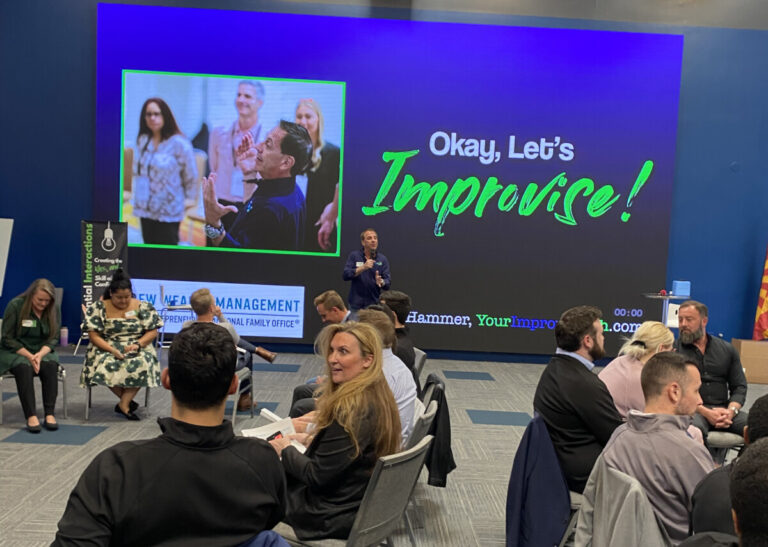
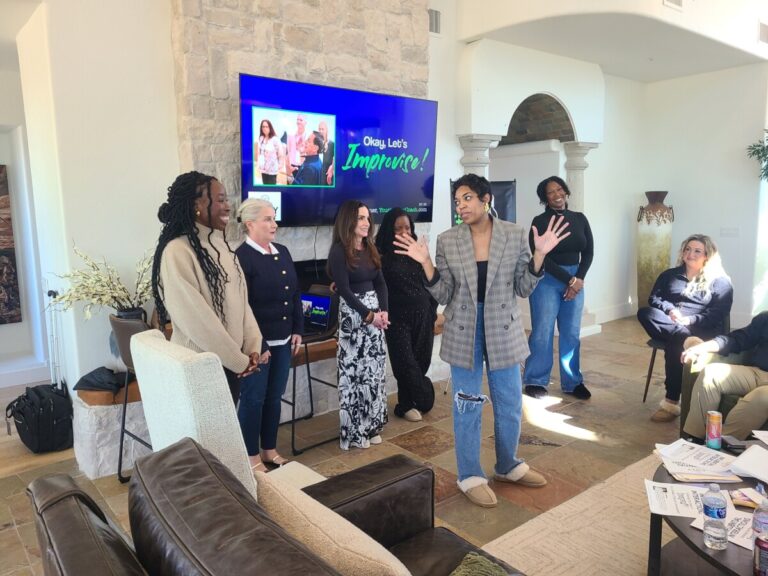
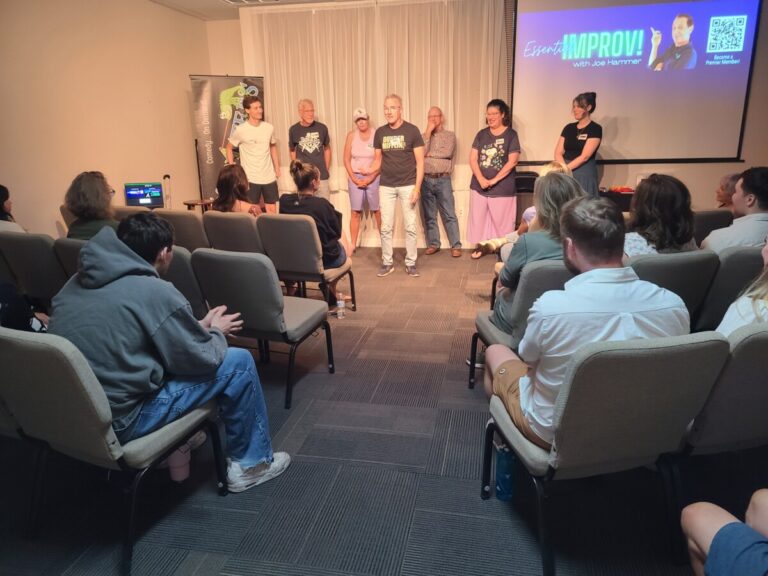
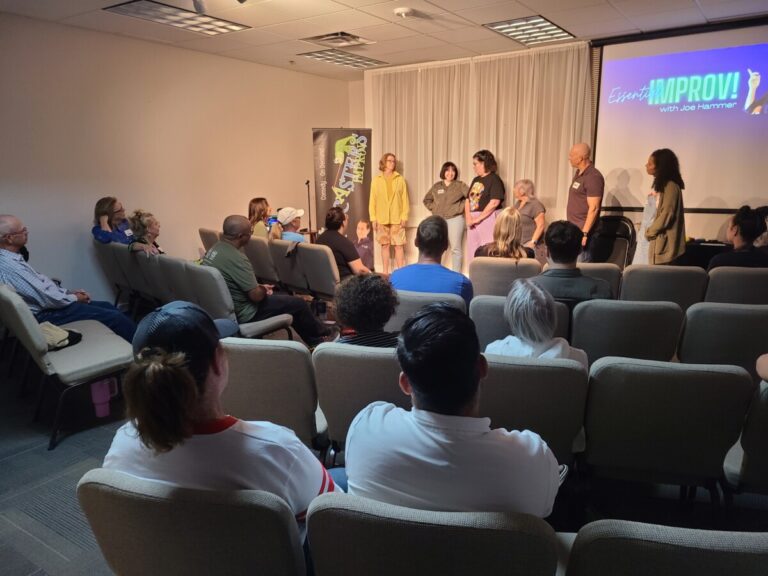
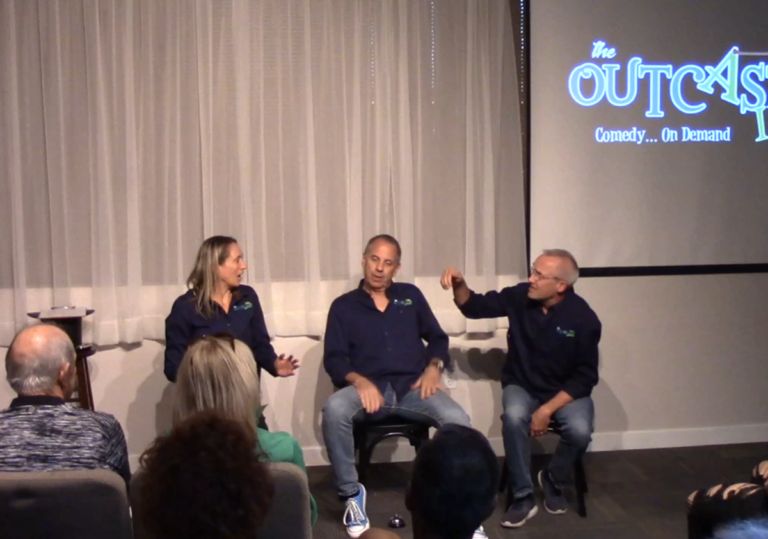
We join our fellow Outcasters on stage with the goal of making people laugh… and we do so with absolutely no script whatsoever. The audience shouts out suggestions, and from that point we’re on our own.
This can sometimes be an anxiety-inducing situation… but only if we allow it to be so.
We must approach our stage presence with a state of calm confidence. Confidence comes with experience and by the internalization of some simple rules that will dampen your fears and discover your creativity. Here’s the first one, and it’s the one I come back to more than any other.
Tip #1: It’s Not About You
When we first practice improv, we assume it’s all about what we say. Eventually we learn that effective improv begins with listening. Our focus must be on our scene partners, supporting their choices and doing whatever we can to make them look good. If you’re feeling anxious on stage, it’s usually because you’re focused on what you are saying or doing, and not on your scene partner. Sadly, most of us aren’t very good at this. We don’t listen. We interrupt. And when we do wait to speak, we often try to pre-plan what we’re going to say by going “into our head.”
Instead, stay present and listen… all the way to the end… to what your fellow players are saying. In doing so, your response will come much more naturally.
“If you want to get out of your head, then you’ve got to get into something else.”
– Joe Hammer
Why this works
The anxious feeling before a scene almost always comes from the same place: worrying about producing something clever, something funny, something worth saying. That worry keeps your attention locked on yourself. The moment you shift your attention entirely to your scene partner — genuinely listening instead of planning… the pressure to “perform” quietly disappears, because it was never really your job to carry the scene alone in the first place.
This isn’t just a stage trick. The same shift works in a nerve-wracking conversation, a job interview, or any moment where you catch yourself rehearsing your next line instead of hearing the person in front of you.
Try it yourself
Next time you’re in a conversation and feel that flicker of anxiety about what to say, try genuinely listening all the way to the end of the other person’s sentence before you start forming your response. It’s a small shift, but it’s the same one we teach on day one of every class, and it changes more than you’d expect.
Come practice it with us
We build this habit from the very first exercise of every beginner class. Join us for a Live Drop-In Class every Wednesday, 6–8 pm, or an Online Zoom Class every Tuesday, 6–7:30 pm, right here in North Scottsdale.
See class details and register →